
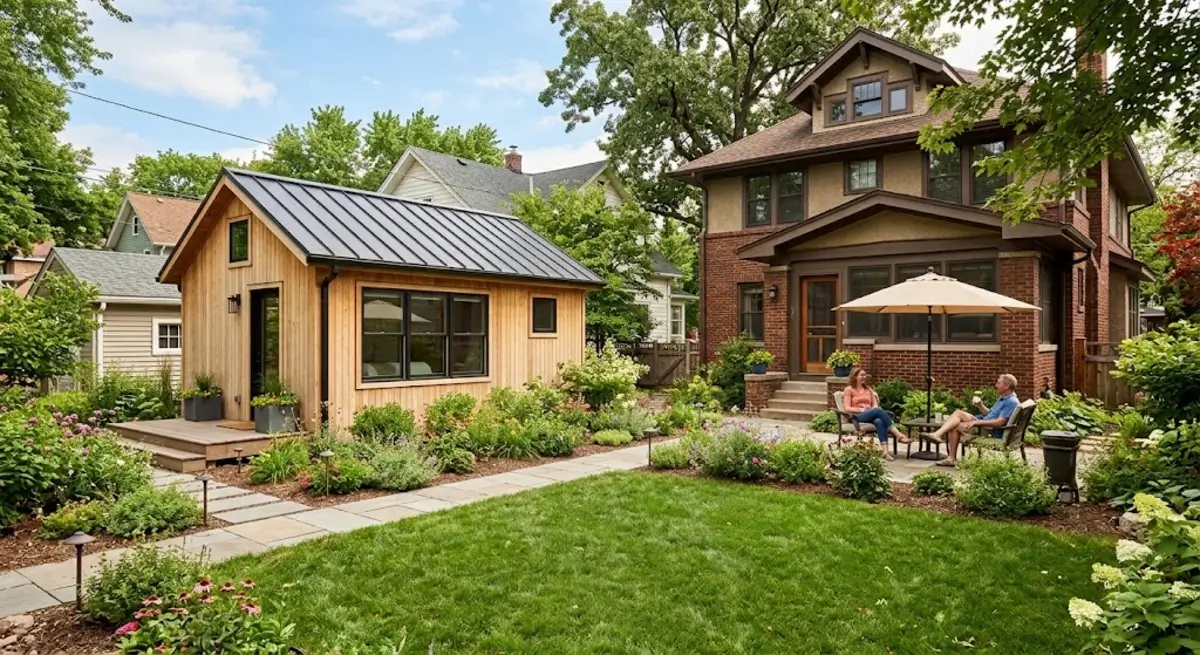
A garage that's been collecting boxes for a decade could be worth more to a Minneapolis owner as a rental than as storage. That's the math behind smart rental performance metrics, which often reveal that a basement or side yard sitting idle is quietly costing owners income they haven't accounted for. Converting that space into an accessory dwelling unit, or ADU, doesn't require buying more land or expanding a lot. It just means putting existing square footage to work.
PMI Lakeshore hears from Minneapolis owners asking about this constantly, and the right move usually comes down to three things: what your zoning allows, what your budget covers, and how long you intend to keep the property.
Key Takeaways
- Building an ADU gives Minneapolis owners a second rent check without buying more land.
- Minnesota's growing familiarity with accessory units has made local approvals more predictable.
- A thoughtfully placed ADU can raise both monthly cash flow and resale value.
- Financing, taxes, and upkeep costs all shift once a second unit joins the property.
- Getting professional input early helps owners avoid costly permitting or tenant mistakes.
What Makes a Space Worth Converting
Not every extra room qualifies as a true ADU. The table below breaks down what separates a rentable unit from a simple addition.
| Feature | Why It Matters |
|---|---|
| Separate entrance | Lets tenants come and go without crossing through the main house |
| Own kitchen | Required for the unit to function as an independent rental |
| Own bathroom | Same requirement, non-negotiable for most local codes |
| Dedicated utilities or submeter | Keeps billing clean between the two units |
| Adequate parking | Often a permitting requirement in denser Minneapolis neighborhoods |
Nationally, the Mercatus Center found that 1 in 5 residential units built in some states today qualifies as an accessory unit, a sign of how common this approach has become for property owners.
Why Minneapolis Demand Supports This Strategy
Minneapolis keeps drawing renters who want proximity to job centers, transit lines, and established neighborhoods. That demand shows up consistently across the metro rather than in a handful of pockets.
- Renters priced out of larger single-family homes look for smaller, standalone units nearby.
- Commuters value quick access to bus and light rail lines over larger square footage.
- Graduate students and young professionals often prefer a private unit over a shared house.
- Empty nesters downsizing within the same neighborhood favor compact, well-located rentals.
We often point owners toward investing tips for landlords before finalizing a design, since the project only pays off when the unit matches what renters in that specific area are asking for.
A Local Conversion Worth Studying
Picture a Minneapolis owner with an unused two-car garage while the main house produced a single rent check each month. After converting it into a studio unit, that owner added a second lease and increased the property's overall resale appeal. Federal housing data supports that pattern. Regulators found that the median appraised value for properties with an ADU reached $1,064,000 in 2023, well above comparable properties without one. Minneapolis values sit at a different scale, but the underlying pattern holds locally too.
Fitting a Second Unit Into Your Ownership Plan
An ADU functions as a capital improvement, so it belongs in your broader ownership strategy rather than a single quarter's budget. Owners managing several upgrades at once benefit from reviewing portfolio management strategy so a new unit doesn't compete for funds against roof repairs or other pressing work.
Protecting the Investment After It's Built
A second structure means a second set of systems and potential repair bills. Before renting out the new unit, it's worth reviewing a home warranty coverage guide to see whether that protection makes sense for a standalone rental with its own furnace, water heater, and appliances.
Money Details Owners Often Miss
Building a second unit is a real financial commitment, and a few line items tend to catch owners off guard.
- Financing typically comes from home equity, a construction loan, or a cash-out refinance, each carrying different repayment terms.
- Rental income from the ADU is taxable, and depreciation, insurance, and repairs need separate tracking from the main home.
- Utilities and landscaping for the new unit add costs that should be built into your rent calculation from the start.
Owners managing two sets of books often turn to professional accounting support once a second unit is added, since the recordkeeping doubles without needing to become more complicated.
Second Unit, Second Set of Duties
Leasing and Screening
A new unit requires its own lease agreement, separate from whatever covers the main house, along with a full screening process. Background checks and rental history reviews don't shrink just because the unit is smaller.
Ongoing Maintenance
Two structures now need attention instead of one, from routine repairs to seasonal upkeep like gutter cleaning and furnace checks.
Getting Clear Numbers Before You Build
Before recommending a second unit to any owner, we review construction costs, expected rent, and how long the project would take to pay for itself, based on comparable Minneapolis properties rather than optimistic guesses. Owners can also browse our resources built for owners, which cover financing questions and screening standards for properties with more than one rentable unit.
FAQs about ADUs in Minneapolis, MN
Does adding an ADU change my property tax bill significantly?
Yes, most counties reassess value once new square footage is added. The increase varies by size and finish level, so it helps to get an estimate from your local assessor before construction begins.
Can I rent an ADU to a family member instead of a stranger?
Absolutely. Many owners use the second unit for aging parents, adult children, or in-laws before ever listing it publicly. You can switch it to a market rental later without any structural changes required.
What permits does a Minneapolis property typically need for an ADU?
Requirements vary by lot size, zoning district, and whether the unit is attached or detached. A local contractor or planning office can confirm exact requirements before you finalize any design plans.
Will an ADU make winter maintenance more complicated?
Snow removal, heating, and pipe insulation now apply to two structures instead of one. Most owners fold this into routine maintenance rather than treating it as a separate seasonal burden.
How long does it typically take to recoup the cost of building one?
Payback periods vary widely based on construction costs and local rent, but many owners see a meaningful return within several years of steady occupancy, especially in areas with strong rental demand.
A Smarter Way to Grow Income From What You Already Own
Adding a second unit raises both monthly cash flow and long-term property value at once, and for Minneapolis owners with unused space, that combination is hard to pass up. PMI Lakeshore works with owners across the Twin Cities weighing this decision, from the earliest budget conversation through leasing and ongoing management once the unit is ready.
Run the numbers on your ADU with our ROI calculator before committing to blueprints, so you know exactly what a second unit could add to your returns.
